Elena Koch · 28 September 2026
Shifts in Notification Customization Mechanics Within Niche Web Services During Periods of User Growth and Feature Layering
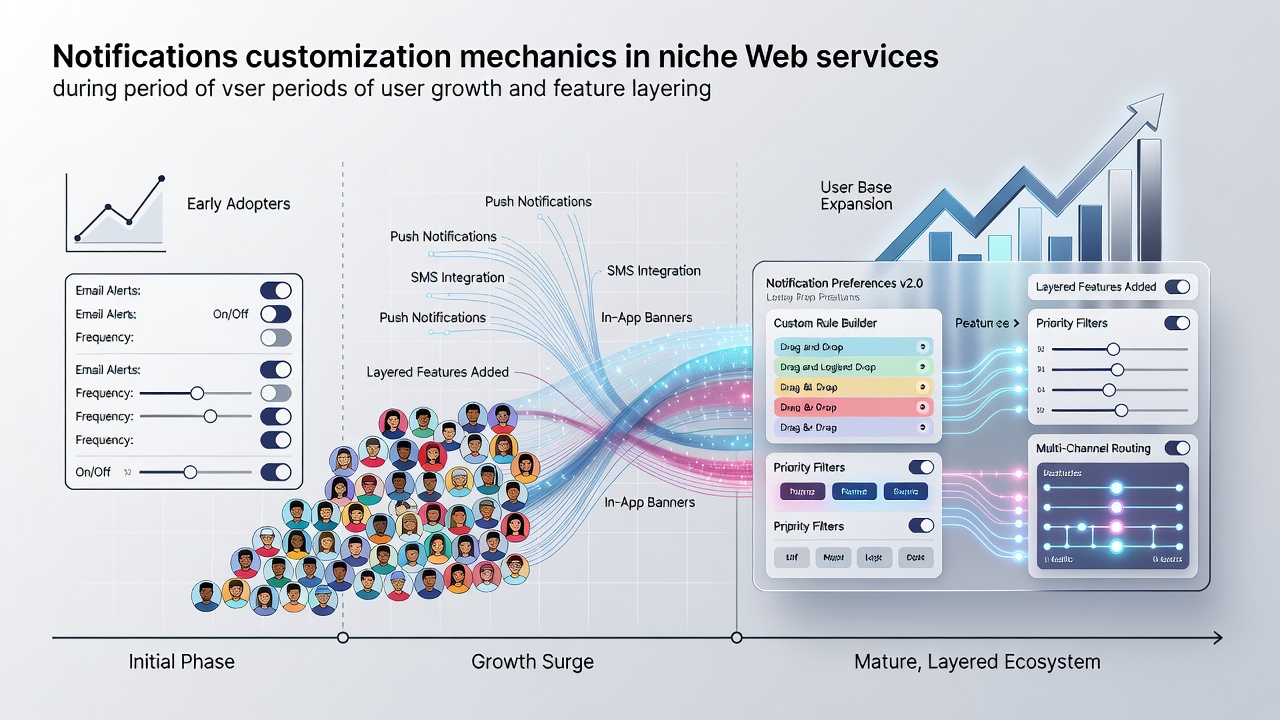
Many niche web services begin with basic notification systems that offer simple on or off toggles for alerts about new content or user interactions, yet these setups often expand rapidly once user bases grow beyond initial small communities and developers introduce additional layers of functionality such as priority settings, channel options, and time-based rules.
Researchers at academic institutions have documented how early-stage platforms typically rely on default email or push notifications that apply uniformly to all users, while data from industry reports shows that customization options multiply as membership numbers climb into the thousands and teams add features like threaded discussions or integrated tools.
Initial Customization Approaches in Emerging Services
Niche platforms focused on specialized topics such as hobbyist forums or professional interest groups start with minimal notification mechanics because small teams prioritize core functionality over granular controls, and this approach works effectively until user growth triggers demands for more tailored experiences according to studies on digital platform evolution.
Observers note that when a service reaches a few hundred active participants, developers commonly introduce basic filters for frequency or type, whereas further scaling to larger audiences leads to the addition of segmented preferences that separate urgent updates from routine ones through layered interfaces.
Effects of User Expansion on Notification Systems
As membership increases, data indicates that services encounter pressure to refine notification customization because diverse user groups develop distinct needs, and this shift often coincides with the integration of analytics that track engagement patterns across different segments.
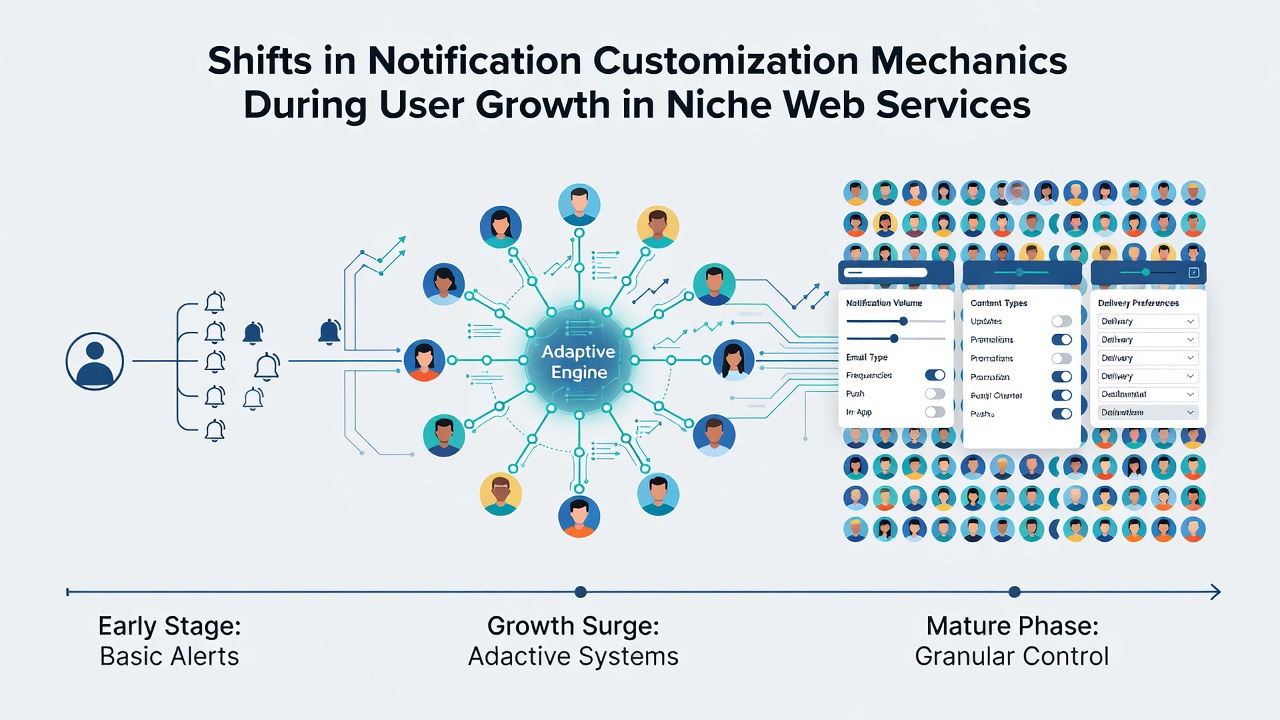
By September 2026 several specialized platforms had rolled out adaptive systems where users could set rules based on activity levels or content categories, and reports from research organizations reveal that such changes correlate with higher retention rates in growing communities compared to those retaining static defaults.
One study from a North American university highlighted how platforms handling user growth implemented backend adjustments that allowed real-time updates to notification profiles without requiring full page reloads, while similar patterns appeared in European digital service analyses that tracked feature additions over multi-year periods.
Feature Layering and Resulting Mechanics Changes
Feature layering occurs when services stack new capabilities onto existing frameworks, and this process directly influences notification customization by introducing options that interact across different modules such as chat integrations or content recommendation engines.
Industry data shows that platforms adding collaboration tools often extend notification controls to cover mentions within those tools, whereas services incorporating multimedia elements create separate toggles for video or image alerts that operate independently from text-based ones.
Those tracking these developments point out that the layering requires careful backend architecture to prevent conflicts between settings, and government-linked digital economy reports from regions like Australia have outlined how such expansions demand compliance considerations around user data handling in notification logs.
Observed Patterns Across Multiple Platforms
Case examples from various niche services demonstrate consistent sequences where initial growth phases prompt basic preference menus, followed by more advanced layering that includes machine-assisted suggestions for optimal settings based on past behavior patterns.
Figures from technology research groups indicate that customization depth increases proportionally with feature count, and users in mature stages gain access to exportable profiles that transfer preferences between related services within the same ecosystem.
What's interesting is how these mechanics evolve without disrupting core operations because developers test incremental rollouts that gather feedback from subsets of the user base before full deployment across all accounts.
Conclusion
Overall patterns in niche web services reveal that notification customization mechanics adapt through successive stages tied directly to user growth and feature layering, with data from multiple sources confirming the addition of controls that match expanding platform capabilities while maintaining system stability.
External analyses continue to track these shifts as services reach new scale milestones, and the resulting systems support more precise user management of information flow without altering the fundamental purpose of keeping participants informed about relevant activity.